
Flat roofing systems for Stanislaus County properties.
TPO single-ply, EPDM rubber, modified bitumen, and built-up roofing systems for Stanislaus County commercial and residential properties. DeHart Roofing — family-owned local operation since 1975 — matches the system to your building, budget, and performance needs.
Flat roofing differentiators
- 01TPO SpecialistHeat-welded white membrane
- 02EPDM InstallBallasted or adhered black rubber
- 03Mod Bit SystemsTorch-down or self-adhered
- 04Coating OptionsElastomeric restore
- 05Free IR ScanPre-bid moisture survey
- 06NDL Warranty15–25 yr no-dollar-limit
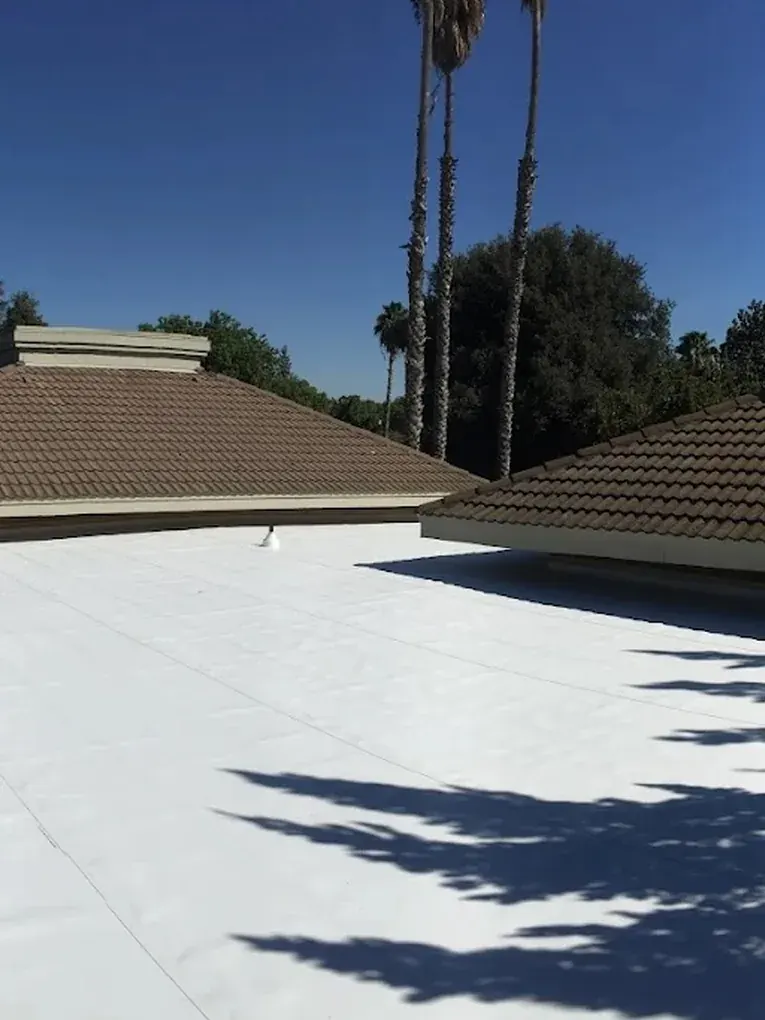
Flat roofing in Stanislaus County
Flat and low-slope roofing is everywhere in Stanislaus County. Strip centers in Modesto and Turlock. Garage roofs and room additions. Mobile homes. Ag processing buildings. Patio covers. These roofs look simple but aren't — wrong system, wrong install, and you'll deal with leaks, ponding water, and early failure.
DeHart Roofing installs and repairs all major flat roofing systems across Stanislaus County. We match the system to your building type, budget, and local climate demands. Flat-rate pricing, written quotes, manufacturer-backed warranties.
Flat roofing systems we install
Four main flat and low-slope systems cover the vast majority of applications in the Central Valley. Here is when each makes sense.
TPO — thermoplastic polyolefin
TPO is the most-installed flat-roof material in California right now. It's a single-ply membrane with heat-welded seams. Done right, the seam bond is stronger than the membrane itself. TPO is white or light gray. That meets California's Title 24 cool-roof rules and drops rooftop temperatures dramatically in our hot summers.
TPO resists UV degradation, chemical exposure (including bird droppings, which accelerate asphalt breakdown), and puncture. It is lightweight and installs fairly quickly. Most commercial TPO systems carry 15 to 20 year manufacturer warranties; high-end systems carry 25 to 30 years. TPO is the right choice for commercial buildings, larger residential flat additions, and any application where energy efficiency is a priority.
Modified bitumen (mod-bit)
Modified bitumen is two layers of asphalt with a polyester or fiberglass reinforcement mat. It's been California's standard residential flat roof for decades. It handles foot traffic. It tolerates small building movement. And it patches well over time.
We install both torch-applied (heat-fused) and self-adhered (peel-and-stick) systems. Torch-applied mod-bit creates strong, durable bonds but needs trained crews and proper safety protocols. Self-adhered peel-and-stick systems are faster and carry no fire risk during install — ideal for residential projects near combustibles. Pabco makes a solid peel-and-stick mod-bit line that we offer as an entry-level option for budget-conscious homeowners and commercial operators. Lifespan: 15 to 25 years depending on system and upkeep.
EPDM — rubber roofing
EPDM is synthetic rubber. You'll see it on residential flat additions, patio covers, and small commercial buildings. It's black, flexible, and surprisingly durable under UV — counterintuitive for a dark surface, but EPDM's molecular structure resists UV breakdown better than asphalt does. It also handles thermal cycling well (hot days, cool nights) thanks to natural rubber flex.
EPDM seams are sealed with adhesive or tape rather than heat-welding. Installation is straightforward. It is a solid low-cost option for smaller residential projects. Lifespan: 20 to 30 years with proper install and occasional seam upkeep.
Built-up roofing (BUR)
Built-up roofing is the classic multi-layer "tar and gravel" system. Multiple layers of bitumen-saturated felt are alternated with hot asphalt, topped with gravel ballast. BUR provides excellent waterproofing, good durability under foot traffic, and proven long-term performance. It is more labor-intensive to install than single-ply systems and heavier, but it has a 30+ year track record in California's climate.
BUR is most appropriate for larger commercial buildings where the added weight and install cost is justified by the proven performance record and multi-layer redundancy. We install BUR on commercial projects where owners want the most time-tested flat roofing system available.
Liquid-applied systems (silicone and acrylic)
Liquid-applied membranes are sprayed or rolled over an existing flat roof surface. They are covered in more detail on our roof coating page. In brief: liquid-applied systems are best for extending the life of an existing flat roof that is in sound condition, not for new install on a worn-out membrane.
Common flat roof applications in Stanislaus County
- Commercial strip centers and office buildings. The majority of Modesto and Turlock's commercial real estate inventory has flat or low-slope roofing. TPO and BUR are standard.
- Residential room additions and attached garages. Many Stanislaus County homes have flat-roof additions — a family room, extra bedroom, or covered patio with a roof over it. These are often neglected until they leak. Modified bitumen or EPDM work well here.
- Mobile and manufactured homes. Mobile homes in Stanislaus County often have original membrane roofing that is decades old. We replace worn-out mobile home roofs with new mod-bit or TPO systems.
- Agricultural processing and storage buildings. Large flat-roofed structures on dairy and farming properties throughout the Stanislaus County ag corridor use TPO or BUR for their size and commercial-grade durability rules.
- Patio covers and carports. Low-slope patio covers need a proper waterproofing system. Modified bitumen peel-and-stick is a common and cost-effective solution.
Common flat roof problems — and when to call
Flat roofs in the Central Valley share a few predictable failure patterns. Knowing them helps you catch problems early.
- Ponding water. Water that does not drain within 48 hours after rain is "ponding." Some systems (EPDM, silicone coatings) tolerate ponding. Others (acrylic coating, BUR in poor condition) wear out quickly when water sits. Ponding is caused by inadequate slope, sagging deck, or clogged drains. Address drainage first — coating or membrane replacement over a persistent ponding problem is treating the symptom.
- Membrane punctures and tears. Foot traffic from HVAC techs, tree debris, and animal activity create punctures. Small punctures in mod-bit or EPDM are patch-repairable. Large or numerous punctures indicate the membrane is past its service life.
- Seam failures. TPO seams that were not heat-welded correctly can peel open. Mod-bit seams can delaminate with age. Seam failures often drive leaks that appear far from the actual roof entry point — water travels under the membrane before dripping through.
- Flashing failures. Where the flat roof meets a parapet wall, HVAC penetration, or drain, the flashing is the most leak-prone point. Central Valley thermal cycling (100+ degree days followed by cool nights) stresses flashings hard. Annual flashing inspection prevents most flat roof leaks.
What flat roofing costs in Stanislaus County
Flat roofing costs in Stanislaus County vary by system and building type. Rough ranges for 2025–2026: modified bitumen residential runs $5 to $9 per square foot installed; TPO commercial runs $7 to $13 per square foot depending on roof size and complexity; EPDM residential runs $5 to $8 per square foot; BUR commercial runs $8 to $14 per square foot. These ranges assume tear-off of the old roof is included.
For comparison, roof coating (on an existing membrane in good condition) runs $2 to $6 per square foot — much less than full replacement when the substrate qualifies.
The install process
Free inspection.
We assess the existing roof condition, drainage, deck integrity, and penetration flashings. We tell you whether repair, coating, or replacement is the right call.
Written flat-rate quote.
All-in written pricing within 48 hours of the inspection.
Permit.
Commercial flat roofing always needs a building permit. Residential additions usually need permits as well. We handle the application.
Tear-off.
Old membrane, insulation (if applicable), and worn-out substrate are removed. We evaluate the deck for soft spots or damage.
Deck repair.
Any structural or sheathing damage is addressed before the new membrane goes down.
Drainage correction.
If the existing drainage is inadequate, we address slope, add drains, or adjust scupper placement before installing the new membrane.
Membrane install.
TPO is heat-welded; mod-bit is torched or peel-and-stick; EPDM is bonded and seamed. All roof openings are flashed and sealed.
Final inspection.
Visual inspection of all seams, flashings, and drains. We walk the roof and check every penetration point.
Why choose DeHart for flat roofing
DeHart Roofing has handled flat roofing in Stanislaus County across every property type — commercial strip centers on McHenry Avenue, residential additions in Ceres and Riverbank, mobile homes in Stanislaus County, and agricultural buildings in the south-Stanislaus ag corridor. Our crews know the systems. We also offer Pabco-tier modified bitumen as an entry-level option for residential owners who need a quality flat roof at a competitive price.
We are honest about when coating makes more sense than replacement — and honest about when a worn-out membrane needs to go, even if a coating sale is easier money for us. Our inspection drives our recommendation, not the other way around.
Under new local ownership since 2026, backed by GAF Master Elite and Owens Corning Platinum Preferred certifications. Serving Stanislaus County.
Other services
We also handle commercial roofing, roof coating, repairs, upkeep, metal, tile, and free inspections. Serving Turlock and the Central Valley.
Frequently asked questions
How long does a flat roof last?
Why does water pool on my flat roof?
Is TPO or modified bitumen better for my building?
Can I install solar panels on a flat roof?
Should I repair or replace my flat roof?
Do flat roofs work in Stanislaus County's climate?
How much does flat roofing cost in Stanislaus County?
Get a free estimate
Get My Free Estimate Call (209) 667-7737Free inspection. Flat-rate pricing. No obligation.
Get your flat roof quote.
We stand by our work. If something we handled fails, we make it right.